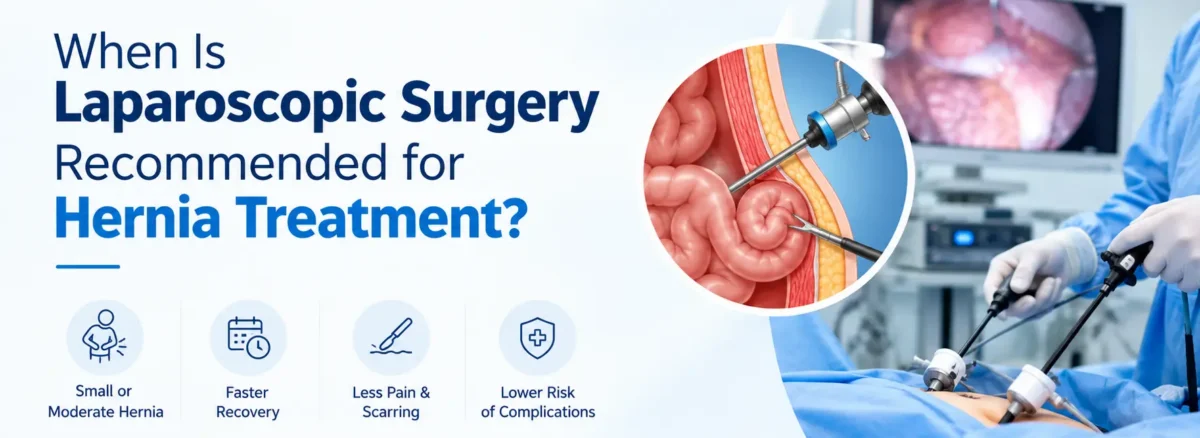
When Is Laparoscopic Surgery Recommended for Hernia Treatment?
When an organ or tissue pushes through an area around the muscles or connective tissue it leads to Hernia. So when you stand, cough, lift something you probably see a bulge and feel a sharp strain. Notably some hernias start with no pain but eventually they get worse and cause discomfort after a time.
Surgery is usually the way to fix a hernia that’s causing symptoms or getting complicated.
There are two types: open surgery and minimally invasive surgery.
Laparoscopic hernia repair uses cuts in the belly instead of one big cut. The surgeon puts in a camera and special tools through these openings. The camera shows a close-up view on a screen so the surgeon can see the hernia and fix the weak spot. A mesh is placed to strengthen the area and lower the chance of the hernia coming
When exactly is this method recommended?. Is it right for everyone with a hernia?
What Is Laparoscopic Hernia Repair?
Laparoscopic hernia repair surgery doesn’t require a big cut as the surgeon makes a few small incisions. Then, a laparoscope (small tube with a camera) and surgical tools are inserted inside the patient’s body.
The camera facilitates sending images to a monitor which allows the surgeon to see the hernia clearly and repair weak parts of the abdominal wall. A flat, flexible & porous sheet called mesh is used to hold everything in place and prevent the hernia from returning back.
The exact way it’s done depends on the location and kind of hernia.
DP Bora Superspeciality Hospital offers laparoscopic hernia surgery as one of its procedures among all other treatments. The department has an HD laparoscopic unit and performs laparoscopic hernia procedures.
A consultation can help determine the appropriate treatment for patients considering laparoscopic surgery in Lucknow.
When Is The Right Time For Laparoscopic Hernia Surgery?
The answer depends on multiple factors. A surgeon considers the following things before choosing a method:
When Symptoms Occurs
If the hernia causes pain, the patient feels heaviness or faces trouble doing daily tasks, then only surgery is required.
Symptoms may come up during::
- Walking or exercising
- Coughing or sneezing
- Lifting things
- Standing for long duration
- Strenuous physical work
Bilateral Inguinal Hernia
Inguinal hernia bulges when fat or intestine pushes through a weak spot in the groin muscle. If you have hernias on both sides of the groin, in such case a laparoscopic approach can be addressed. Inguinal hernias are very common so depending on your health and surgeries procedures, laparoscopic repair might be the best way. The final decision will still require a proper checkup and essential tests. Not just because you have a hernia.
When a Hernia Comes Back After Surgery
If the hernia returns it can be more complex. Scar tissue from the surgery may make it harder to fix. In some cases laparoscopic surgery offers a path avoiding the same scar tissue. based on the previous repair and the patient's condition. Hernia laparoscopic surgery may be considered in selected cases depending on how the first repair was done, where the new hernia is, the condition of the abdominal wall and your overall health.
When There Are More Than One Hernia
Some people have multiple hernias. Laparoscopic surgery can sometimes let the surgeon look at and fix more than one area at once.
What Are Benefits of Laparoscopic Approach?
Many people choose minimal surgery because it uses smaller cuts than open surgery. Possible benefits include:
- Smaller cuts
- Less damage to nearby tissues
- Less pain after surgery
- Smaller scars
- Early movement after surgery
- Faster recovery
For inguinal hernia repair, evidence reviewed in the international guidelines shows advantages in postoperative recovery and chronic pain with laparo-endoscopic approaches when performed by appropriately experienced surgeons.
For laparoscopic ventral hernia repair, SAGES guidelines have also reported fewer wound infections compared with open repair, although recurrence and postoperative pain can be similar between the approaches in the evidence reviewed.
These differences are useful when discussing surgery, but they should not be treated as guarantees. The expected benefit depends on the individual hernia and the patient’s circumstances.
Are There Reasons to Choose Open Surgery Instead?
Yes. A laparoscopic approach is not automatically superior in every case.
The surgeon may recommend open surgery because of the location or complexity of the hernia, previous operations, the patient’s medical condition or other factors identified during the assessment.
For some patients, open repair may also be technically more appropriate or may avoid the additional considerations associated with laparoscopic surgery.
The choice should therefore be a conversation rather than a competition between two techniques.
A good surgical plan asks a more useful question than “Which method is newer?”
It asks: Which method is appropriate for this hernia and this patient?
What Exactly Happens in Evaluation?
While evaluating your condition the surgeon will check your symptoms & medical history.
You will be suggested for an ultrasound or CT scan to get an understanding of the hernia.
You can ask the surgeon:
- What exactly is the kind of hernia I have?
- Do I need surgery as of now?
- Should I go for a laparoscopic surgery?
- Will mesh be needed?
- What are the risks?
- How long will recovery take?
- When can I go back to normal chores?
These questions can make the consultation much more useful.
They also help you understand why a particular procedure has been recommended instead of choosing a technique based only on the size of the incision.
Is Hernia Surgery Urgent?
Not every hernia needs an emergency cure. If symptoms are mild and there are no complications, you can plan for a surgery.
Some signs need urgent attention.
If your hernia suddenly becomes painful, hard, tender or can’t be pushed back, it may be trapped. Other stark warnings include vomiting, belly swelling, severe pain or trouble passing gas or stool.
Don’t ignore these. A trapped or strangulated hernia can cut off blood flow to the tissue, which is serious. See a doctor rightaway.
How recovery looks like in Laparoscopic Hernia Repair Surgery
Recovery after hernia laparoscopic surgery varies from patient to patient. Most people can start walking soon after surgery. Heavy lifting and strenuous activities should be avoided for as long as the surgeon says.
You’ll get instructions on:
- How to care for your wounds
- What medicines to take
- What activities are safe
- What to eat
- When to come back for checkups
A small simple hernia repair may heal faster as compared to a repeat hernia surgery.
Choosing Right Surgical Team Matters
The success of a surgery also depends on how good your surgical team is. Your surgeon’s experience, how well the pre operation check is held, the operating room quality, anesthesia support & post operation care, all of these things matter.
If you’re looking for laparoscopic surgery in Lucknow just don’t go by ads or what is being circulated online. The experience of the surgical team should be an important consideration.
DP Bora Superspeciality Hospital’s general surgery department offers hernia surgery and advanced laparoscopic procedures, including laparoscopic hernia repair. The hospital has an HD laparoscopic unit and other modern surgical tools.
Remember a proper consultation will help you figure out if the available surgery is right in your case.
Final Thoughts
Laparoscopic hernia surgery is a minimally invasive treatment option. Smaller cuts and quicker recovery are reasons surgeons choose this method.
If you’re considering laparoscopic hernia repair start with a meeting with a surgeon. A full check-up can show what kind of hernia you have and whether laparoscopic or open repair is better, for your situation.
Book your consultation today to explore the right hernia treatment for you.
Frequently Asked Questions
Is laparoscopic hernia repair surgery a painful treatment?
Can every hernia be treated laparoscopically?
Is mesh always used in laparoscopic hernia repair?
How soon can I return to daily work?
Does every hernia require surgery?

Rupali Sharma is a content writer and storyteller who turns complex ideas into clear, engaging and reader-friendly content. With experience writing across healthcare, finance, education, legal, logistics and lifestyle, she creates content that informs, connects, and drives action. Her focus is simple: content that feels human, adds value, and leaves a lasting impression.